
The Ultimate Guide to the Best City Tours in Nicaragua: Uncover Central America's Hidden Gems
Discover the best city tours in Nicaragua. Explore colonial charm in Granada, volcanic wonders in Masaya, and vibrant history in Managua with EcoTerra.
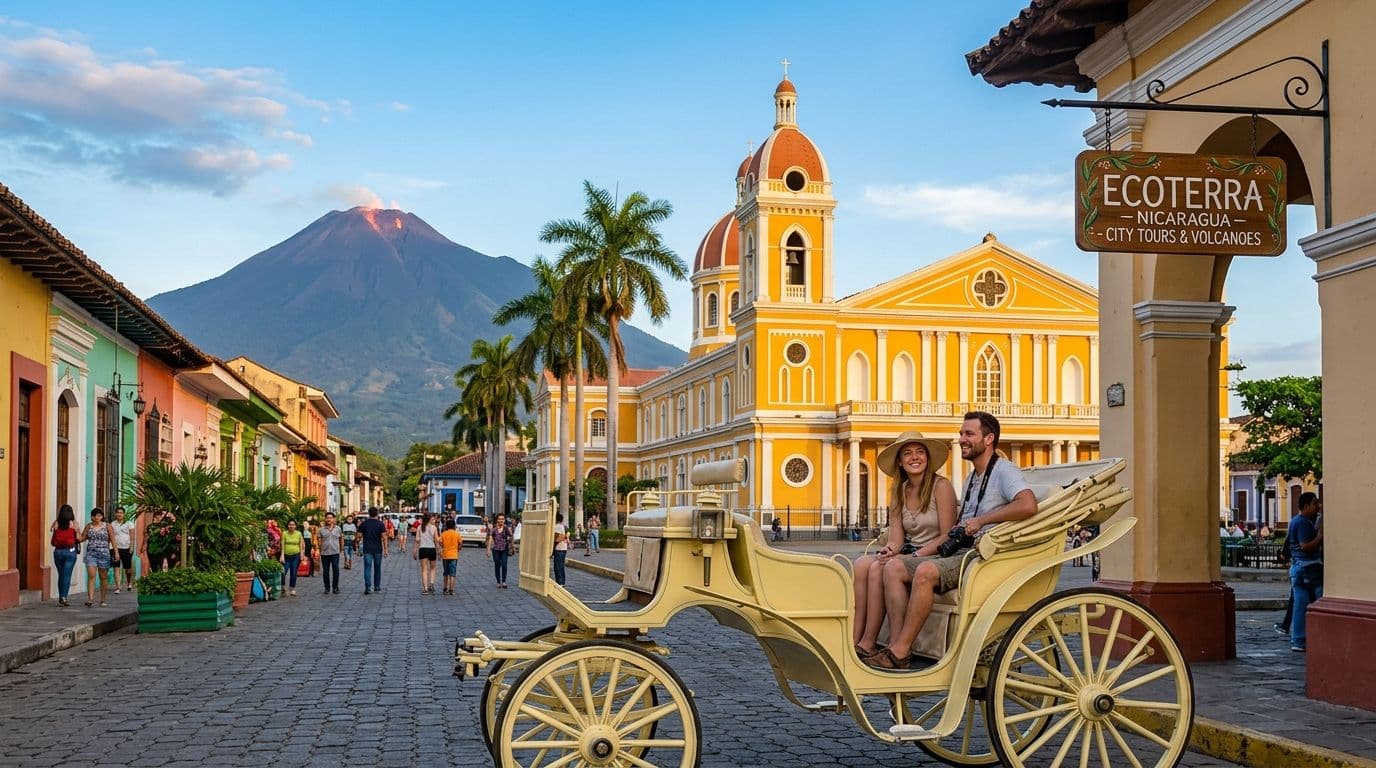
Imagine standing on top of an active volcano at twilight, looking down into a glowing lake of liquid magma, only to find yourself an hour later walking down cobblestone streets lined with vibrant, pastel-colored Spanish colonial mansions. Nicaragua is a country where history, nature, and culture do not just exist side by side; they collide in the most spectacular ways. While many travelers know this beautiful nation for its pristine Pacific surf breaks and dense rainforests, the true heartbeat of the country lives within its urban centers. From the revolutionary murals of its capital to the timeless elegance of its oldest colonial outposts, embarking on professional city tours in Nicaragua opens up a world that most tourists completely miss. But what is the absolute best-kept secret that local guides only share when the crowds go home? We will reveal that exact spot near the end of this guide, but first, let's look at how to navigate these incredible cities.
Planning a trip to Central America requires making choices. You want safety, deep historical insights, comfortable transport, and authentic interactions. That is why structured urban excursions are growing in popularity. Whether you are a history buff, a culinary enthusiast, or a photography lover, taking organized tours guarantees you do not waste time getting lost or missing the hidden backstories of landmark monuments.
Why City Tours in Nicaragua Offer the Ultimate Travel Experience
Nicaragua holds a unique place in Central American history. It houses the oldest European-founded cities in the continental Americas, yet its modern history is shaped by dramatic shifts and a resilient, artistic population. Walking through these cities alone is pleasant, but exploring them with an expert guide transforms your vacation into an immersive story.
When you book city tours in Nicaragua, you gain access to decades of local knowledge. You learn why certain buildings are painted specific colors, the political meaning behind public art installations, and where to find the finest hand-rolled cigars and award-winning rums without paying tourist-trap prices. Furthermore, logistics become effortless. Private, air-conditioned transport handles the transition between bustling city squares and nearby natural parks, keeping you safe, cool, and energized throughout your journey.
The Classic Granada City Tour: Step Back into Colonial History No travel itinerary to this country is complete without spending significant time in Granada. Founded in 1524 by Francisco Hernández de Córdoba, Granada is a living museum. It sits gracefully on the shores of Lake Nicaragua (Cocibolca), the largest lake in Central America, providing a stunning natural backdrop to architectural grandeur.
A comprehensive Granada City Tour usually begins in the Central Plaza (Parque Central). This bustling hub is alive with local vendors selling vigorón (a delicious traditional dish of yuca, chicharron, and cabbage salad served on a plantain leaf) and horse-drawn carriages waiting to take guests through the historic quarters. Your guide will lead you to the iconic Cathedral of Our Lady of the Assumption, with its striking yellow and red facade dominating the skyline. Climbing the bell tower of the nearby Merced Church offers an unparalleled 360-degree view of the terracotta rooftops stretching all the way to Mombacho Volcano.
Planning your itinerary? Read our deep dive into the region's top destination: Is Granada, Nicaragua worth a visit to discover why this colonial gem belongs at the top of your travel list.
As you walk down the pedestrian-only Calle La Calzada, you will dive into stories of pirate invasions. Granada was sacked multiple times by English and French buccaneers who sailed up the San Juan River. You will also learn about William Walker, the American filibuster who attempted to conquer Central America and left the city in ashes, leaving behind the infamous message, "Here was Granada." Today, the beautifully restored architecture stands as a testament to the city's enduring spirit.
Exploring the Islets of Granada Most urban excursions in Granada seamlessly transition from land to water. Just a few minutes from the historic center lies the Asese Peninsula, where you board a private motorboat to explore the famous Islets of Granada. This collection of 365 small volcanic islands was formed thousands of years ago when Mombacho Volcano blew its top into the lake. Today, these islands host a community of local fishermen, luxury vacation homes, a historic Spanish fortress (Fortín de San Pablo), and even an island inhabited entirely by friendly monkeys. It is the perfect way to combine rich architecture with tropical wildlife viewing in a single afternoon.
Masaya City: The Vibrant Heart of Nicaraguan Folklore and Volcanic Might Just a short drive from Granada brings you to Masaya city, widely recognized as the cradle of Nicaraguan folklore and craftsmanship. If you want to take home authentic, high-quality souvenirs, this is your paradise. A standard city itinerary here emphasizes cultural immersion and raw natural power.
The cultural journey centers around the Mercado de Artesanías (Craft Market), housed inside a spectacular, castle-like 19th-century neo-gothic structure. Inside, the air is filled with the sweet scent of cedar wood and leather. You can watch artisans weave intricate hammocks by hand, polish delicate ceramics from the nearby white villages (Pueblos Blancos), and paint vivid landscapes on canvases. Your guide will help you interact directly with the makers, ensuring your purchases directly support local families.
The Glowing Magma of Masaya Volcano National Park No exploration of Masaya city is complete without ascending to its crowning jewel: the Masaya Volcano. Unlike most volcanoes around the world that require hours of strenuous trekking, Masaya is fully accessible by vehicle. A paved road leads right up to the lip of the Santiago crater.
Visiting at sunset or during the evening hours is a transformative experience. As night falls, the heavy sulfur gases clear away to reveal a mesmerizing sight: the glowing red lava lake bubbling deep within the throat of the earth. The indigenous Chorotega people once viewed this crater as a god and called it "Cangantenga" (the mountain that burns), while the Spanish conquistadors labeled it "La Boca del Infierno" (The Mouth of Hell) and erected a massive wooden cross on the edge to exorcise evil spirits. Witnessing this raw geological power is an essential highlight of any urban and natural itinerary in the region.
Managua City Tour: Discovering the Secrets of the Capital
Many travelers bypass the capital city, which is a major missed opportunity. A curated Managua City Tour reveals a fascinating, complex metropolis that has rebuilt itself multiple times after devastating earthquakes and revolutionary conflicts. It is a city that doesn't look like a traditional colonial town because its beauty lies in its mid-century modern history and resilient cultural spirit.
The historical heart of Managua centers around the Plaza de la Revolución. Here, you will find the hauntingly beautiful ruins of the Old Cathedral of Santiago, which survived the devastating 1972 earthquake but remains stabilized as a historical monument. Right across the plaza sits the National Palace of Culture, which houses the National Museum, showcasing pre-Columbian pottery, statues, and a comprehensive look at the country's literary history, including the works of legendary poet Rubén Darío.
Loma de Tiscapa and the Modern Waterfront
For the best view of the capital, tours ascend to the Tiscapa Lagoon Historical National Park, located inside the volcanic crater of an extinct volcano right in the middle of the city. At the summit stands the iconic silhouette monument of General Augusto C. Sandino. This site served as the presidential palace grounds for many decades and holds deep historical significance regarding the country's sovereignty and political evolution.
From there, the tour moves to the vibrant, modern side of Managua along the shores of Lake Managua (Xolotlán) at the Salvador Allende Puerto. This beautifully developed boardwalk features lively restaurants, replicas of historic houses from old Managua, and open-air parks where families gather to enjoy the cool lake breeze. It shows a dynamic, forward-looking side of the country that balances out the ancient colonial history found in other regions.
How to Choose and Prepare for Your Urban Excursions
To get the absolute most out of your city tours in Nicaragua, a little preparation goes a long way. The tropical climate means it is generally warm and humid year-round, so packing smart is key to staying comfortable.
Footwear: Cobblestone streets and historic ruins require sturdy, closed-toe walking shoes or supportive sandals. Avoid flimsy flip-flops for full-day walking tours.
Sun Protection: The Central American sun can be intense. Bring a wide-brimmed hat, high-SPF sunscreen, and polarized sunglasses.
Hydration: Always carry a reusable water bottle. Staying hydrated ensures you keep your energy up during afternoon walking segments.
Cash: While major restaurants and hotels accept credit cards, having small denominations of the local currency (Córdobas) or US dollars is essential for buying street food, handicrafts, or tipping street performers.
The Ultimate Local Secret Revealed
Remember that local secret we promised at the beginning? When you take a late afternoon tour through Granada, ask your EcoTerra guide to take you past the standard tourist route to the old, quiet neighborhood of Xalteva. Tucked away behind an unassuming wooden door lies an old, family-run workshop where traditional hand-painted cement tiles are still pressed using centuries-old iron molds. It is a mesmerizing process that creates the vibrant geometric floors found in the grandest colonial hotels. Standing there, watching an artisan pour colored liquid concrete into a custom mold, you realize that the beauty of this country isn't just in its grand monuments—it is preserved in the quiet, passionate hands of its people.
Are you ready to experience the magic of Central America for yourself? Contact EcoTerra Nicaragua today to book your custom urban adventure and discover the untold stories behind these historic streets!
Frequently Asked Questions About City Tours in Nicaragua
1. Are city tours in Nicaragua safe for international tourists? Yes, absolutely. Nicaragua is widely recognized as one of the safest countries for travelers in Central America. Booking a professional tour with a certified local agency like EcoTerra adds an extra layer of comfort, security, and effortless navigation through both historic centers and natural parks.
2. What is the best time of year to book a city tour in the country? The best time to visit is during the dry season, which runs from November to April. During these months, you will enjoy sunny skies and minimal rainfall, making it ideal for walking tours. However, the green season (May to October) offers lush, vibrant green landscapes and fewer crowds, which many travelers find equally beautiful.
3. Can I combine a Granada City Tour and a Masaya Volcano trip in one day? Yes, this is actually one of the most popular day-trip combinations available. Because Granada and Masaya are located less than 30 minutes apart by vehicle, you can easily spend your morning exploring the colonial architecture and islets of Granada, and head to Masaya city in the afternoon to visit the artisan market and see the glowing lava lake at night.
4. What language are the tours conducted in? Professional tour operators provide fully bilingual guides fluent in both English and Spanish. If you require tours in other languages, such as German, French, or Italian, these can easily be arranged in advance upon request.
5. Are these urban tours suitable for children and older adults? Yes, our itineraries are fully customizable and designed to accommodate all age groups and physical fitness levels. Walking segments can be shortened, and private air-conditioned transport is always nearby to provide a comfortable place to rest between historic stops.
Ready to Explore Nicaragua?
Browse our tours and travel packages designed by local experts.