What to Pack for a Trip to Nicaragua: The Complete Packing Guide
Planning a trip to Nicaragua? Discover exactly what to pack for beaches, volcanoes, and colonial cities. Get our expert, seasonal packing checklist.
Picture this: You are standing at the base of Cerro Negro, a looming black volcano just outside of León. The wind is whipping against your face, and in your hands, you hold a wooden boarding plank. You are about to slide down 728 meters of loose volcanic ash at speeds of up to 50 kilometers per hour. It is an exhilarating, once-in-a-lifetime rush. But as you look down at your feet, a cold realization hits you. You packed light canvas slip-ons instead of rugged hiking boots, and you forgot your protective bandana at the hotel. The volcanic rocks are sharp, the dust is unforgiving, and your entire afternoon is about to shift from a thrilling highlight to an incredibly uncomfortable mistake.
Nicaragua is one of the most geographically diverse and spectacular countries in Central America. From the cool, misty cloud forests of Matagalpa to the sun-drenched, surf-heavy shores of San Juan del Sur, your itinerary can easily transition from rugged mountaineering to pristine beach relaxation within a single day.
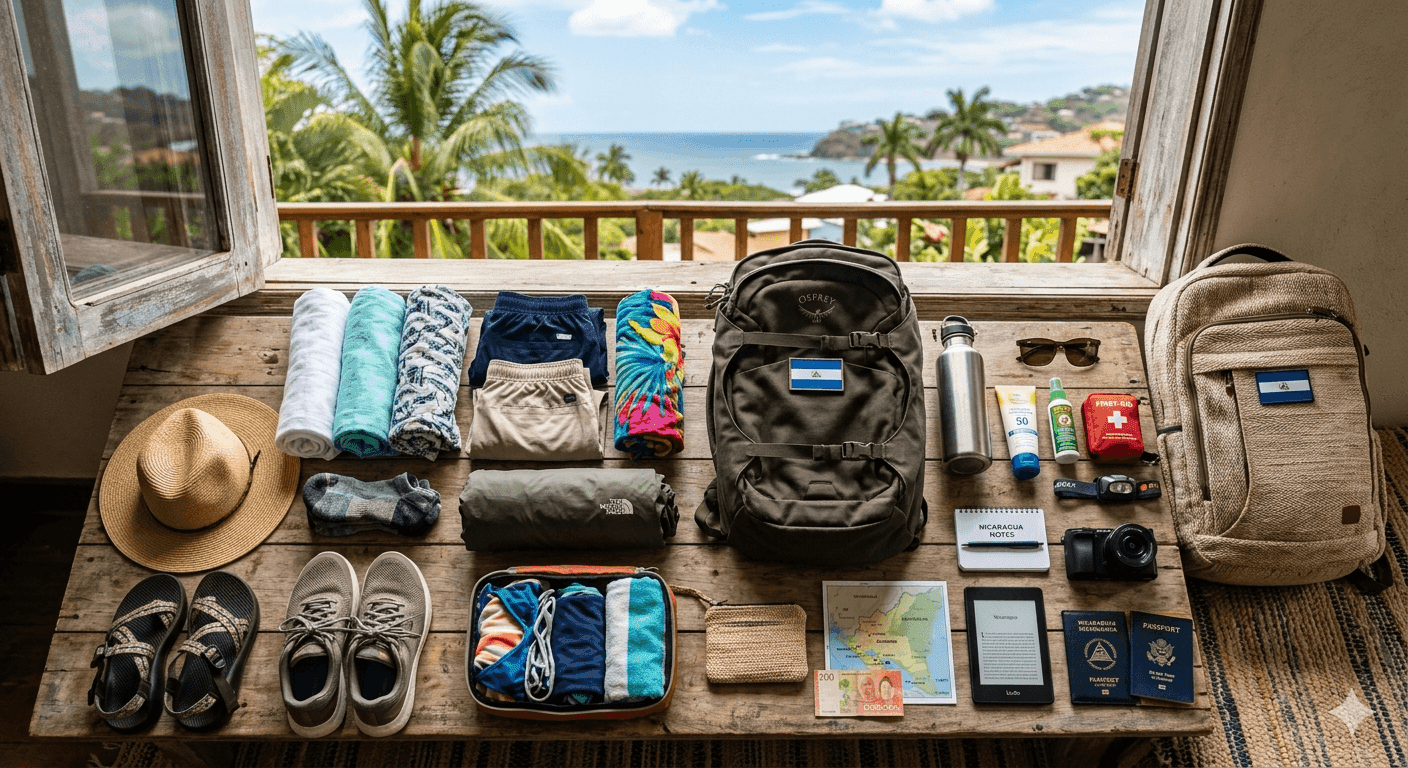
This stunning diversity means that packing for a trip to Nicaragua requires a smart, deliberate strategy. Packing too much will weigh you down on local buses and internal flights, while packing too little will leave you hunting for specific outdoor gear in remote villages where specialized shops simply do not exist. Whether you are booking comprehensive Nicaragua travel packages or designing a customized independent itinerary, this ultimate packing guide ensures you arrive prepared for every climate, terrain, and activity this beautiful country throws your way.
Understanding Nicaragua's Climate and Microclimates
Before throwing items into your suitcase, you must understand the weather patterns of the land of lakes and volcanoes. Nicaragua generally experiences two distinct seasons: the dry season (locally known as verano) and the rainy season (known as invierno).
The dry season runs from November to April. During these months, you can expect constant sunshine, clear skies, and virtually no rain. Temperatures along the Pacific coast and in the lowlands routinely climb between 30°C and 35°C (86°F to 95°F). Humidity is lower during this period, but strong trade winds can blow across the country, especially around Lake Nicaragua and Ometepe Island, kicking up dust and lowering evening temperatures slightly.
The rainy season spans from May to October. Don't let the word "rainy" scare you away from booking Nicaragua vacations during this time. Mornings are typically bright and sunny, with heavy, dramatic downpours occurring in the late afternoon or evening. The landscape transforms into a vibrant, lush green, and the country's rivers and waterfalls flow at their peak. However, humidity skyrockets, making the air feel significantly warmer than the actual thermometer reading.
Regional Temperature Variations
Nicaragua's terrain is far from uniform. To pack efficiently, you must divide your trip into three distinct geographical zones: The Pacific Lowlands & Coastal Regions (Granada, León, San Juan del Sur): Consistently hot and humid year-round. Cotton, linen, and moisture-wicking fabrics are your absolute best friends here. The Northern Highlands (Matagalpa, Jinotega, Estelí): Characterized by high altitudes, coffee plantations, and cloud forests. Temperatures here are notably cooler, often dropping to 15°C (59°F) or lower during the night. You will explicitly need warm layers and a solid jacket for this region. The Caribbean Coast & Corn Islands: A tropical maritime climate with high rainfall potential even during the traditional dry season. Waterproof protection and quick-drying clothes are absolutely non-negotiable.
The Core Clothing Strategy: The Art of Layering The golden rule for your trip to Nicaragua is simple: pack versatile, lightweight layers. You want clothes that can dry quickly overnight, handle intense sweat, and look respectable enough for an evening meal in a colonial restaurant in Granada.
Daywear for Exploring Cities and Historic Sites
When strolling through colonial cities or taking organized tours in Nicaragua, opt for casual, breathable attire. While Nicaragua is a relaxed tropical country, it remains culturally conservative outside of beach towns. Local residents rarely wear short shorts or revealing tops in city centers or churches. 3-4 Lightweight T-shirts or Tank Tops: Blend synthetic moisture-wicking shirts with casual cotton tees. 2 Pairs of Breathable Shorts: Linen, cotton, or quick-dry nylon styles work perfectly. 1-2 Pairs of Lightweight Trousers: Loose linen pants or technical travel trousers keep you cool while shielding your skin from aggressive mosquitoes and intense UV rays. 1 Casual Dress or Romper: Ideal for warm evenings exploring local culinary hotspots.
Adventure and Hiking Apparel
- If your travel plans include volcano boarding, hiking up Concepcion Volcano on Ometepe, or trekking through the Miraflor Nature Reserve, your standard city wear won't cut it. You need technical apparel built to withstand physical exertion and rough environments.
- 2-3 Moisture-Wicking Athletic Shirts: Avoid heavy 100% cotton shirts for strenuous hikes; they trap
- sweat, cause chafing, and take days to dry in high humidity.
- 1-2 Pairs of Rugged Hiking Pants or Leggings: Crucial for protecting your legs against sharp volcanic
- scree, low-lying brush, and biting insects.
- 1 Long-Sleeve Performance Shirt: Provides excellent UV protection during high-altitude exposure and
- serves as a barrier against bugs in deep jungle environments.
- Underwear and Socks: Pack at least 5-7 pairs of breathable, moisture-wicking underwear. Bring 3-4 pairs
- of high-quality merino wool or synthetic hiking socks to prevent painful blisters.
- Beachwear and Resort Attire
- For the surf-centric Pacific breaks or the crystal-clear waters of the Caribbean, focus on high-durability
swimwear and sun protection.
- 2-3 Swimsuits / Boardshorts: Alternating sets ensures you never have to pull on a damp, cold swimsuit
- in the morning.
- 1 Rash Guard: Essential if you intend to take surf lessons or spend hours snorkeling. The equatorial sun
- reflects intensely off the ocean surface.
- 1-2 Lightweight Beach Cover-ups: Simple sarongs, oversized linen shirts, or light kaftans for moving
- seamlessly from the surf to a beachfront café.
Footwear Matrix: Walk, Hike, and Swim Comfortably
- Footwear is often where travelers make their biggest packing errors. Bringing the wrong shoes can severely limit your ability to participate in top-tier adventure activities.
- Do not attempt to hike Nicaragua's active volcanoes in smooth-soled gym sneakers. The loose ash and gravel slide easily underfoot, making a sturdy pair of trail runners or boots absolute lifesavers for your safety and comfort.
Essential Documentation Pouch
- Passport: Must possess at least 6 months of validity remaining from your date of entry into the country.
- Tourist Visa Fee Cash: Upon arrival at international airports or land borders, you must pay a mandatory
- $10 USD fee for a tourist card. This must be paid in cash. Have crisp, undamaged US dollar bills ready.
- Proof of Onward Travel: Immigration officials occasionally ask to see a printed copy of your return flight
- or international bus ticket out of the country.
- Travel Insurance Certificate: Keep a physical copy of your policy detailing emergency medical
- evacuation coverage.
- Cash and Currency Management
- The official currency of Nicaragua is the Córdoba (NIO), though US Dollars are widely accepted in tourist
- hubs like San Juan del Sur, Granada, and major hotels.
- Bring Small US Dollar Bills ($1, $5, $10, $20): Ensure your dollar bills are completely free of tears,
- marks, or excessive wear. Many local businesses will flatly refuse US currency if it looks damaged.
- Debit/Credit Cards: Inform your bank of your travel dates to avoid automated fraud freezes. Visa is the
- most widely accepted card type across the nation; Mastercard is accepted in larger establishments, while
- American Express is rarely functional.
- Local Cash for Rural Areas: When leaving major cities, always withdraw enough local Córdobas from an
- ATM. Street food vendors, local public buses (chicken buses), and rural artisan markets do not accept
- credit cards or large-denomination currency bills.
Maximize Your Journey with Specialized Nicaragua Itineraries
Now that your bags are perfectly organized, you are ready to immerse yourself in the vibrant culture, jaw- dropping landscapes, and historic charm of Central America. Packing smart removes the stress of travel,
leaving you completely free to enjoy the unforgettable experiences waiting for you. Are you looking to skip the logistical headaches and experience the absolute best of this tropical paradise? Partnering with local experts can elevate your entire experience. Explore tailor-made Nicaragua travel packages designed around your unique travel styles, or secure professional guidance through curated tours in Nicaragua that unlock hidden gems from coast to coast. Start planning your dream getaway today and step into your adventure with absolute confidence!
Ready to Explore Nicaragua?
Browse our tours and travel packages designed by local experts.